
Play Aviator Now!
Home → Auto Cashout
Aviator Auto Cashout
Auto cashout in Aviator
The auto cashout feature allows players to pre-set a specific multiplier threshold for automatic withdrawal, effectively removing manual reaction time from the betting process. This tool interacts directly with the game's core mechanic where a plane flies upward while a multiplier rises continuously until it crashes. By automating the exit, high rollers can execute precise strategies without hesitation during volatile rounds.
Aviator round parameters
| Max multiplier | x1,000,000 |
| RTP | 97.00% |
| Bet range | 0.10 EUR / USD / GBP (varies by operator) - 100 EUR / USD / GBP (varies by operator) |
This functionality is available within the classic crash/multiplier game developed by Spribe, which was released in 2019 and operates on a provably fair system using SHA-256. The auto cashout does not alter the built-in house edge of 3.00%, ensuring that the theoretical return remains at 97.00% over a very long run. Players relying on this automation must understand that it manages execution speed rather than changing the mathematical probability of the outcome.
Unlike traditional slots which have no reels or paylines, Aviator requires immediate decision-making as the multiplier increases, making automated exits crucial for consistent bankroll management. The dual-bet mode permits one bet to be set for auto cashout while another remains manual, offering strategic flexibility for experienced users. This separation allows high rollers to hedge their exposure against sudden crashes that occur before reaching their target multipliers.
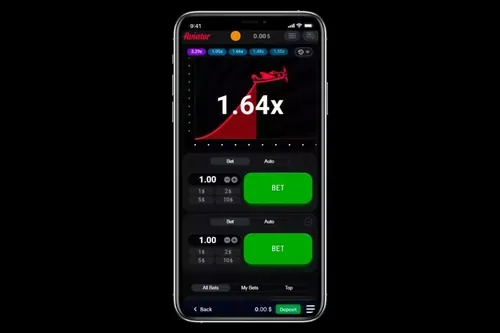
Setting a target multiplier
Setting a target multiplier involves defining the exact point at which the rising number triggers an automatic withdrawal, a critical parameter for managing risk in this instant game. High rollers often select targets between x2 and x10 to balance frequency of wins against the potential for larger payouts before the plane flies away. This approach contrasts with games like Dice by Spribe, which offers an adjustable volatility setting and a maximum win cap of x970 for different risk profiles.
The theoretical return to player (RTP) of 97.00% applies across all multiplier settings, meaning the house retains a 3.00% edge regardless of whether the target is low or extremely high. Operators may configure lower RTP versions such as 96.00% or 94.00%, which significantly impacts the long-term expected value for players attempting to hit large multipliers. Understanding these variations is essential for high rollers who calculate their expected loss based on total turnover rather than individual session outcomes.
A common strategy involves setting a conservative target to secure frequent small wins, which helps sustain the bankroll during extended playing sessions. However, chasing higher multipliers increases the variance, requiring a larger initial stake to absorb potential losing streaks before a significant win occurs. The provably fair certification by iTech Labs and BMM Testlabs ensures that the crash point is determined randomly and cannot be manipulated by the operator.
The maximum possible win in Aviator is capped at x1,000,000, representing the highest theoretical payout achievable if a player successfully cashes out at the absolute peak. Achieving such extreme multipliers is statistically rare, requiring patience and a robust betting system that can withstand numerous consecutive crashes. High rollers must allocate sufficient funds to cover the inevitable losses incurred while waiting for these rare high-value events to materialize.
Why automation removes hesitation
Hesitation in betting often leads to missed opportunities when the multiplier reaches high values just before the plane flies away, resulting in lost profits for indecisive players. Auto cashout eliminates this psychological barrier by executing the withdrawal exactly at the predefined moment, ensuring that the player captures the intended profit every time. This precision is vital for high rollers who operate with strict profit targets and cannot afford to lose gains due to split-second delays.
The game's design features a multiplayer live bet feed, allowing players to observe others' actions, but human reaction times are too slow to match automated systems consistently. In contrast, the automated exit guarantees that the bet closes precisely when the multiplier hits the set value, independent of external distractions or emotional pressure. This reliability supports disciplined betting strategies that rely on consistency rather than luck or reflexes during intense gameplay moments.
By removing the need for manual intervention, automation also reduces the cognitive load on the player, enabling them to focus on broader bankroll management strategies. High rollers can manage multiple bets simultaneously through the dual-bet mode, assigning auto cashout parameters to each without constant monitoring. This efficiency allows for more complex betting patterns that would be impossible to execute manually within the fast-paced nature of the crash game.
The provably fair algorithm combines a server seed with multiple client seeds and a nonce to determine the crash point, ensuring transparency and fairness in every round. While automation handles the timing, the underlying randomness remains unchanged, meaning that no strategy can guarantee profit against the 3.00% house edge. Players must accept that long-term results will align with the theoretical return of 97.00%, regardless of how perfectly they execute their automated trades.
Low targets versus high targets
Choosing between low and high target multipliers fundamentally alters the risk-reward profile of each bet, influencing both the frequency of wins and the size of individual payouts. Low targets, such as x1.50, offer higher win rates but smaller returns, suitable for preserving capital during volatile sessions in this crash game. High rollers often use this approach to build a steady base of profits before attempting larger, riskier bets with higher multipliers.
Conversely, targeting high multipliers like x50 or x100 yields substantial payouts but comes with a significantly lower probability of success, requiring a larger bankroll to sustain losses. The maximum win of x1,000,000 represents the extreme end of this spectrum, accessible only through rare occurrences where the plane flies far beyond typical ranges. Players must weigh the statistical likelihood of hitting these extremes against the potential impact on their overall financial position.
When comparing Aviator to other titles like Dice, which has a max win of x970 and adjustable volatility, the choice of target becomes even more strategic. Aviator's fixed mechanics mean that risk is managed solely through the selection of the cashout point, whereas Dice allows adjustments to the underlying probability distribution. High rollers must adapt their betting patterns to suit the specific constraints and opportunities presented by each game's unique structure.
The house edge of 3.00% remains constant regardless of the target multiplier chosen, meaning that the expected loss per unit wagered is identical for both conservative and aggressive strategies. However, the variance differs greatly, with high targets producing wider swings in bankroll value compared to the steadier growth associated with low targets. Understanding this dynamic is crucial for high rollers who must balance their desire for large wins with the necessity of maintaining sufficient funds for continued play.
Auto bet alongside auto cashout
The auto bet feature complements auto cashout by automatically placing subsequent wagers after a round concludes, streamlining the betting process for repetitive strategies. This combination allows high rollers to execute continuous betting sequences without manual intervention, ensuring that each new round starts immediately following the previous outcome. Such automation is particularly useful for implementing martingale or reverse martingale systems, where bet sizes adjust based on prior results.
In Aviator, this dual automation works within the context of a game that has no reels, paylines, or spins, focusing entirely on the rising multiplier and the crash point. The provably fair system ensures that each round is independent, meaning that previous outcomes do not influence future results, regardless of how consistently bets are placed. High rollers must recognize that automation enhances efficiency but does not alter the fundamental randomness governed by the SHA-256 algorithm.
Using auto bet alongside auto cashout requires careful configuration to avoid excessive losses during prolonged losing streaks, especially given the potential for rapid consecutive crashes. The maximum win of x1,000,000 serves as an upper limit for payouts, but achieving it requires precise timing and adequate bankroll support. Players should set stop-loss limits within the auto bet parameters to protect their funds and prevent unintended depletion of their balance during automated sessions.
The theoretical return of 97.00% implies that for every 100 units wagered over a very long run, approximately 97 units are returned to players, with the remaining 3 units retained by the house. This statistic holds true whether bets are placed manually or automatically, emphasizing that the method of entry does not affect the long-term expected value. High rollers must account for this edge when calculating their overall profitability and budgeting for extended periods of automated play.
Aviator: key facts
| Parameter | Value |
|---|---|
| Game | Aviator |
| Studio | Spribe |
| Released | 2019 |
| RTP | 97.00% |
| House edge | 3.00% |
| Max win | x1,000,000 |
Choosing a cashout target
The maximum win cap for Aviator stands at x1,000,000, representing the highest possible theoretical payout per single round. This ceiling requires high rollers to place substantial stakes to realize meaningful returns, as small bets cannot approach this limit regardless of timing. The operator may configure lower RTP settings like 96% or 94%, which reduces the expected value of such large wagers over time.
A player targeting the x1,000,000 win must accept that the probability of reaching such multipliers is extremely low compared to frequent small wins. Unlike Plane Game by Spribe which shares the 97.00% RTP and high volatility profile, Aviator offers no secondary mechanics to hedge against total loss. High stakes magnify the variance, meaning bankroll management becomes critical when chasing top-tier multipliers in this crash format.
The dual-bet mode allows splitting a wager into two separate actions, enabling one stake to secure profit while the other chases higher multipliers. This strategy helps mitigate risk but does not alter the fundamental house edge of 3.00% built into the game's algorithm. Auto cashout can lock in gains at predefined levels, removing emotional decision-making during rapid multiplier ascensions.
Frequency against payout size
The theoretical return to player (RTP) is set at 97.00%, meaning the house retains a 3.00% edge over an extended period of play. High rollers often overlook how frequency interacts with payout size, assuming larger stakes guarantee proportional frequency of wins. In reality, crash games distribute outcomes randomly, so high-frequency low-multiplier rounds occur just as often for large bets as for small ones.
Cashout decisions directly impact the effective volatility experienced by the player, who controls the exit point rather than the game engine. Aiming for consistent small payouts under x2.00 results in higher hit rates but lower overall profit potential compared to rare x100+ exits. This dynamic forces strategic balance between survival and aggression when managing significant bankrolls.
Provably fair technology via SHA-256 ensures each round's outcome is independent and verifiable, preventing pattern exploitation by skilled players. Operators certified by iTech Labs and BMM Testlabs audit these systems, guaranteeing that frequency data remains statistically accurate. High rollers must rely on long-term averages rather than short-term streaks, as randomness dominates individual session results.
Testing targets in demo
Demo modes allow testing auto cashout strategies without risking real funds, helping high rollers calibrate their exit points before committing capital. The absence of financial pressure enables experimentation with aggressive multipliers up to x1,000,000 without immediate consequence. However, demo outcomes do not reflect the psychological stress of real-money betting, which often leads to deviation from planned targets.
The 97.00% RTP remains constant across both real and demo versions, ensuring that statistical expectations are identical in both environments. Players can verify that provably fair algorithms generate similar distribution patterns, confirming that testing yields reliable behavioral insights. This consistency allows optimization of bet sizing relative to available bankroll before transitioning to live play.
Auto cashout features function identically in demo mode, allowing precise testing of reaction-time alternatives at specific multiplier thresholds. High rollers can simulate scenarios where manual cashout fails due to latency, verifying system responsiveness under simulated load. These tests refine execution speed and decision protocols, reducing errors during actual high-stakes sessions.
Adjusting after a losing streak
After consecutive losses, high rollers often increase stake sizes to recover deficits, but this martingale approach ignores the fixed 3.00% house edge. Each round in Aviator operates independently, meaning previous outcomes have no influence on future crashes or successful cashouts. Increasing bets during downturns accelerates bankroll depletion rather than facilitating recovery.
The dual-bet mode offers a structured method to adjust exposure by allocating smaller stakes to conservative targets and larger amounts to speculative ones. This diversification prevents total loss from a single bad round while maintaining participation in high-multiplier opportunities. It provides a mechanical buffer against emotional escalation following unexpected crashes.
Auto cashout settings should be reviewed after losing streaks to ensure they align with current risk tolerance and bankroll status. Raising automatic exit points may reduce frequency of wins but increases average payout size, shifting the risk-reward profile. Adjustments must account for the fact that RTP remains unchanged regardless of betting strategy or timing.
When to turn automation off
Manual control becomes necessary when market conditions or personal intuition suggest deviating from preset auto cashout parameters at any given moment. Automation removes reaction time from the outcome, but skilled players may override it to capture slightly higher multipliers before crashes. This flexibility requires discipline to avoid impulsive decisions that undermine long-term profitability.
The multiplayer live bet feed provides real-time visibility into other players' cashout points, offering social proof for timing adjustments. Observing collective behavior can inform decisions to stay in longer or exit earlier than automated settings dictate. However, herd mentality poses risks, as majority exits often coincide with pre-crash moments rather than optimal peaks.
Turning off automation allows direct engagement with the rising multiplier curve, enhancing situational awareness during volatile rounds. High rollers must weigh the benefit of potential extra gains against the increased probability of missing the exit entirely. Strategic disengagement from auto features should only occur when confidence in timing exceeds the reliability of programmed limits.
Double bet setups
The Aviator game allows high rollers to place two simultaneous bets within a single round, effectively doubling the exposure to the rising multiplier. This dual-bet mode is a core feature provided by developer Spribe, enabling players to manage risk through strategic allocation of their bankroll across two distinct positions. The setup requires precise timing, as both wagers must be placed before the plane begins its ascent into the increasing multiplier zone.
With an RTP of 97.00%, the theoretical return remains consistent regardless of whether one or two bets are active during the flight phase. High rollers often utilize this configuration to hedge their exposure, ensuring that a loss on the primary stake might be offset by gains on the secondary position. The mathematical expectation does not change, but the variance profile shifts significantly for those managing large sums in each round.
A common practical example involves wagering 500 € on a conservative auto cashout target while placing another 100 € on a higher-risk manual withdrawal strategy. This combination allows the player to secure base returns from the first bet while chasing larger multipliers with the second stake. Such a split leverages the game's mechanic without altering the underlying house edge of 3.00% inherent in the crash algorithm.
Splitting stakes across two bets
Spribe’s Aviator offers a unique mechanic where players can divide their total round budget between two independent betting panels, each operating with its own cashout parameters. This functionality supports complex staking strategies, allowing high rollers to allocate different portions of their capital to varying risk profiles within the same flight cycle. The interface displays both bets clearly, ensuring full visibility of the total commitment before the multiplier begins to rise.
The maximum win cap stands at x1,000,000, which applies to the total payout potential from any single successful cashout action during the round. When splitting stakes, a player might assign a smaller portion to a low multiplier like x2.00 and reserve the larger sum for a potential run toward higher values. This approach maximizes the utility of the max win limit by balancing guaranteed small wins against rare, high-value outcomes.
Provably fair technology via SHA-256 ensures that the outcome of each round is random and verifiable, regardless of how the stakes are distributed. The server seed combined with client seeds determines the crash point, meaning the split strategy only affects exposure, not the probability of the crash. Players must remember that the house edge remains fixed at 3.00% across all betting configurations and stake sizes.
It is crucial to note that the auto cashout feature closes a bet automatically at a chosen multiplier, removing reaction time from the outcome. While this tool aids in executing a split strategy, it does not alter the built-in statistical advantage held by the operator. High rollers should calibrate these automatic triggers carefully to align with their specific risk tolerance and bankroll management plans.
Combining a safe and a risky target
High rollers frequently combine a safe, low-multiplier target with a risky, high-multiplier target to balance volatility and secure steady returns alongside speculative gains. For instance, setting an auto cashout at x1.50 for one bet ensures frequent small payouts, while leaving the second bet manual to chase multipliers exceeding x10.00. This hybrid approach mitigates the risk of total loss during early crashes while preserving upside potential.
The theoretical RTP of 97.00% applies to the long-term average of all such combined bets, assuming infinite play over hundreds of thousands of rounds. In practice, the safe bet reduces the frequency of negative sessions, whereas the risky bet introduces the variance necessary for significant profit spikes. The interplay between these two targets creates a dynamic risk profile that differs from standard single-bet strategies.
Comparatively, games like Tower Rush by Galaxsys offer an RTP of 97.00% but lack the immediate real-time cashout mechanic of Aviator, making stake splitting irrelevant there. Aviator’s live bet feed allows players to observe others’ successes and failures, providing social proof that may influence the decision to adjust targets mid-flight. However, past results do not predict future crashes due to the provably fair random number generation.
Operators may configure lower RTP settings such as 96% or 94% in some jurisdictions, which would slightly increase the house edge on these combined strategies. High rollers must verify the specific RTP configuration of their chosen platform, as this directly impacts the expected value of both the safe and risky components. A 3.00% house edge versus a 4.00% edge represents a significant difference in long-term profitability for large volumes of play.
Limits of any automated plan
Automated cashout features in Aviator remove human reaction time, ensuring that a predetermined multiplier is reached without delay, but they cannot predict when the plane will fly away. The crash point is determined by a SHA-256 hash combining server and client seeds, making it impossible for any software or plan to guarantee success. Consequently, automation serves only as a execution tool, not as a predictive mechanism for avoiding losses.
The maximum win cap of x1,000,000 limits the potential payout regardless of how sophisticated the automated strategy appears, capping the upside for even the most aggressive plans. High rollers using auto-cashout must ensure their target multiplier is set below this absolute ceiling to avoid missing out on the highest possible returns. The limitation is structural, embedded in the game design by Spribe, and applies uniformly to all players.
Unlike slot machines, which rely on reels and paylines, Aviator’s continuous multiplier rise means that every millisecond of delay can result in a total loss if the crash occurs. Automated plans cannot adapt to sudden changes in market sentiment visible in the live bet feed, nor can they react to the psychological pressure of a rapidly rising number. The rigidity of code contrasts sharply with the fluidity of human intuition in high-stakes environments.
The house edge of 3.00% remains constant regardless of the automation level, meaning that no algorithm can overcome the statistical disadvantage over time. Even with perfect execution of an auto-cashout strategy at a specific multiplier, the long-term expectation remains negative relative to the total amount wagered. Players must recognize that automation simplifies the process but does not alter the fundamental mathematics of the crash game.
What automation cannot fix
No automated system can eliminate the house edge of 3.00% inherent in the Aviator game, regardless of how precisely the auto cashout targets are calibrated. The theoretical RTP of 97.00% dictates that over millions of rounds, the casino retains a fixed percentage of all wagers placed by players. Automation merely streamlines the betting process; it does not change the underlying probability distribution or the fairness certification provided by iTech Labs.
The provably fair mechanism using SHA-256 ensures randomness, meaning that patterns perceived by players are illusory and cannot be exploited by any software or plan. High rollers relying on automation might fall prey to the gambler’s fallacy, believing that a series of crashes increases the likelihood of a high multiplier. This misconception ignores the independence of each round and the immutable nature of the cryptographic seed generation.
While features like the live bet feed provide social data, automation cannot interpret or act upon this information faster than the game’s speed allows. The dual-bet mode and auto cashout are tools for managing exposure, not for generating positive expected value beyond the configured parameters. Any claim that automation can consistently beat the crash mechanic contradicts the certified integrity of the Spribe platform.
In contrast to games with variable RTP configurations, Aviator’s core mechanics remain stable, yet operators may still offer lower RTP versions like 96% or 94%. Automation cannot detect or adapt to these backend variations in real-time, potentially leading to suboptimal returns if players unknowingly engage with less favorable configurations. Awareness of the specific game version’s RTP is essential for high rollers seeking to maximize their long-term retention of funds.
DemoRTP & VolatilityHow to PlayAuto CashoutStrategyBonusesMobileDownload & AppMax WinSimilar GamesReviewFAQSitemap
Aviator 2026