
Play Aviator Now!
Home → Strategy
Aviator Strategy
Approaching Aviator sensibly
Spribe released Aviator in 2019 as a distinct crash game, establishing a theoretical return to player rate of 97.00% for high rollers who understand the mechanics. This percentage represents the long-term average over hundreds of thousands of rounds, indicating a house edge of exactly 3.00% that remains constant regardless of betting patterns or previous outcomes. Players must recognize that this edge applies to every single round played, meaning consistent losses are mathematically probable without strict discipline. Operators may sometimes configure lower RTP values like 96% or 94%, so verifying the specific setting is crucial before placing any wager.
The maximum win cap sits at x1,000,000, offering substantial potential payouts for those willing to risk significant capital during volatile sessions. High rollers often target these extremes, but achieving such multipliers requires precise timing and the ability to withstand long losing streaks without altering their strategy. The provably fair system using SHA-256 ensures transparency, allowing players to verify each round's outcome independently after it concludes. This verification process adds a layer of trust essential for large-scale gambling operations where integrity directly impacts bankroll management.
Unlike traditional slots with reels, Aviator features no paylines or spinning symbols, relying entirely on a rising multiplier that players must cash out from before the plane flies away. This unique mechanic demands constant attention and quick decision-making, distinguishing it from games like Dice which also offer adjustable volatility and a max win of x970. Understanding these structural differences helps players set realistic expectations for their session duration and potential returns based on their chosen stake size. The dual-bet mode allows for simultaneous wagers, providing additional flexibility for managing risk exposure across different outcomes within the same round.
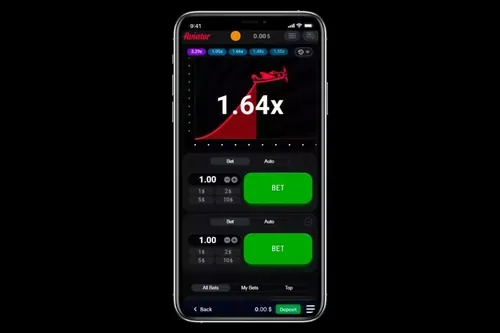
Common systems and their limits
The theoretical return of Aviator stands at 97.00%, which establishes a fixed house edge of 3.00% for all players regardless of strategy. This mathematical baseline means that no betting progression can alter the long-term expectation, as the game relies on a provably fair algorithm using SHA-256. High rollers often attempt to overcome this edge through aggressive staking, but the built-in advantage remains constant over millions of rounds.
Spribe developed this crash mechanic in 2019, introducing a dual-bet mode that allows two simultaneous wagers within a single round structure. The maximum win cap is set at x1,000,000, providing a clear upper limit for potential payouts that high-stakes players must respect. Unlike traditional slots, there are no reels or paylines, meaning outcomes depend entirely on the timing of the cash-out action before the plane flies away.
Independent auditors like iTech Labs and BMM Testlabs certify the fairness of these multiplier games, ensuring server seeds and client seeds combine correctly. High rollers frequently compare Aviator to other Spribe titles such as Plane Game, which shares the same 97.00% RTP and high volatility profile. These certifications provide transparency, yet they do not guarantee short-term wins or protect against the inherent risks of rapid bankroll depletion.
Flat betting explained
Flat betting requires placing the identical stake amount during every single round, maintaining a consistent risk level throughout the entire playing session. For example, a player wagering 100 € per round with a 97.00% RTP will lose approximately 3 € on average per bet over time. This method preserves the bankroll longer than progressive strategies because it avoids the exponential loss patterns associated with raising stakes after consecutive defeats.
The game features an auto cashout function that executes trades automatically when the rising multiplier reaches a predefined threshold set by the user. A high roller might configure this feature to trigger at x2.00, securing small but frequent profits while avoiding the temptation to chase higher multipliers. This disciplined approach aligns with the theoretical return, ensuring that emotional decisions do not override the mathematical expectations of the crash mechanic.
Unlike slots that rely on random symbol combinations, Aviator uses a continuous multiplier curve where the player must manually or automatically withdraw funds. The absence of spins or paylines simplifies the calculation of expected value, allowing players to focus strictly on the probability of the plane flying away. Consistent flat betting helps manage variance, though it cannot eliminate the 3.00% house edge that applies to every transaction made in the game.
Progressive staking risks
Progressive staking involves increasing the wager size after each loss, a strategy that fails to change the built-in house edge of 3.00% in Aviator. Raising stakes after losses accelerates the rate of bankroll exhaustion, potentially leading to ruin much faster than flat betting would achieve. High rollers who employ this method often face catastrophic losses when the multiplier crashes early, depleting their funds before a winning round occurs.
The maximum win of x1,000,000 offers an attractive target, but chasing this figure through escalating bets ignores the statistical reality of the crash point. Operators may configure lower RTP versions like 96% or 94%, which further reduces the player's advantage and increases the speed of capital erosion. The provably fair system ensures randomness, meaning past crashes have no influence on future outcomes, making recovery through increased stakes mathematically unsound.
Aviator allows dual bets, enabling players to hedge positions, but progressive staking undermines this safety net by requiring larger capital reserves for subsequent rounds. The game released in 2019 by Spribe has been certified by BMM Testlabs, confirming that the server seed and nonce generate unpredictable results. Attempting to beat the algorithm through financial escalation only exposes the player to greater variance without improving the underlying expected value of each round.
What the maths actually allows
The 97.00% RTP indicates that for every 100 € wagered, the game returns 97 € on average over hundreds of thousands of rounds. This theoretical return does not predict individual session outcomes, meaning a high roller could easily lose their entire bankroll despite the favorable percentage. The house edge of 3.00% represents the casino's guaranteed profit margin, which accumulates steadily as more players engage with the crash mechanic simultaneously.
Operators sometimes deploy alternative configurations with reduced RTP values of 96% or even 94%, significantly altering the long-term profitability for serious players. A reduction from 97.00% to 94% increases the house edge from 3.00% to 6.00%, effectively doubling the expected loss per unit wagered. High rollers must verify the specific version being played, as the provably fair algorithm operates independently of the configured return percentage settings.
Spribe designed the game to allow a maximum win of x1,000,000, which sets a hard cap on potential payouts regardless of the stake size. This limit protects the operator from extreme liability while still offering life-changing sums for those who successfully cash out at critical moments. The dual-bet mode provides additional strategic depth, but the mathematical expectations remain governed by the specific RTP configuration active on the server during the round.
Aviator: key facts
| Parameter | Value |
|---|---|
| Game | Aviator |
| Studio | Spribe |
| Released | 2019 |
| RTP | 97.00% |
| House edge | 3.00% |
| Max win | x1,000,000 |
Reading variance honestly
Variance in Aviator describes the fluctuation between actual results and the expected 97.00% return, causing significant swings in a player's bankroll over short periods. High volatility means that large multipliers appear infrequently, requiring patience and discipline to survive the dry spells between profitable cash-outs. Players who ignore this variance often increase their stakes prematurely, attempting to force outcomes that the mathematical model does not support.
Spribe's use of SHA-256 cryptography ensures that each round's outcome is determined by a combination of server seeds and client seeds plus a nonce. This technical framework guarantees that neither the operator nor the player can predict when the plane will fly away, preserving the integrity of the game. High rollers must accept that short-term results are purely random, and no amount of analysis can identify patterns in the crash points generated by the algorithm.
Certification by iTech Labs and BMM Testlabs confirms that the random number generation meets industry standards for fairness and unpredictability. While the maximum win is capped at x1,000,000, the frequency of such events is extremely low, making them statistically insignificant for most playing sessions. Understanding this distribution helps players manage expectations, recognizing that consistent profitability is impossible due to the immutable 3.00% house edge embedded in the game mechanics.
Learning the game in demo first
The theoretical return to player (RTP) of Aviator stands at 97.00%, a figure representing the long-term average over hundreds of thousands of rounds rather than a guarantee for any single session. This metric establishes a house edge of 3.00% against the player, meaning that every euro wagered carries an expected loss of three cents over extended play periods. Understanding this baseline helps high rollers manage expectations before risking significant capital on real-money bets.
Spribe developed Aviator as a crash game featuring a rising multiplier instead of traditional slot reels or paylines, which fundamentally alters how bankroll is managed compared to conventional casino titles. The mechanic requires players to cash out before the plane flies away, a process governed by provably fair algorithms using SHA-256 to ensure transparency. Recognizing this distinct structure allows experienced gamblers to apply specific timing strategies rather than relying on luck-based spin outcomes.
Adjusting stakes to your budget
The maximum potential win in Aviator reaches x1,000,000, offering a lucrative ceiling for high rollers willing to endure the inherent volatility of the crash mechanic. This cap applies to the multiplier outcome relative to the initial stake, meaning a bet of ten euros could theoretically yield one million euros if the multiplier hits the extreme peak. Such asymmetric payout structures require precise stake sizing to preserve the overall bankroll during inevitable losing streaks.
Recognising a bad session
A bad session often manifests when the cumulative losses exceed the predetermined bankroll limit, signaling that the built-in house edge has eroded the available funds faster than anticipated. Unlike progressive staking methods that raise stakes after losses, flat betting maintains consistent risk exposure but does not alter the mathematical disadvantage over time. Identifying these patterns early prevents the common error of chasing deficits with larger wagers that accelerate ruin.
Stopping while ahead
The dual-bet mode allows players to place two simultaneous wagers, enabling a strategy where one bet secures profits while the other chases higher multipliers. This feature supports disciplined exit points by allowing partial cash-outs that lock in gains even if the second bet eventually crashes. Implementing such structured exits helps high rollers preserve winnings against the statistical probability of eventual loss.
Responsible play in practice
Aviator utilizes auto cashout functionality, which automatically terminates a round when a specified multiplier threshold is reached, removing emotional decision-making from the equation. This technical safeguard aligns with responsible gambling principles by enforcing pre-set limits on exposure during each individual round. High rollers can use this tool to maintain strict control over their total spend without requiring constant manual intervention.
DemoRTP & VolatilityHow to PlayAuto CashoutStrategyBonusesMobileDownload & AppMax WinSimilar GamesReviewFAQSitemap
Aviator 2026